Full shop. Thin margin.
5 things to know before you discount this festive season. A Marketing Director’s view.
The short answer
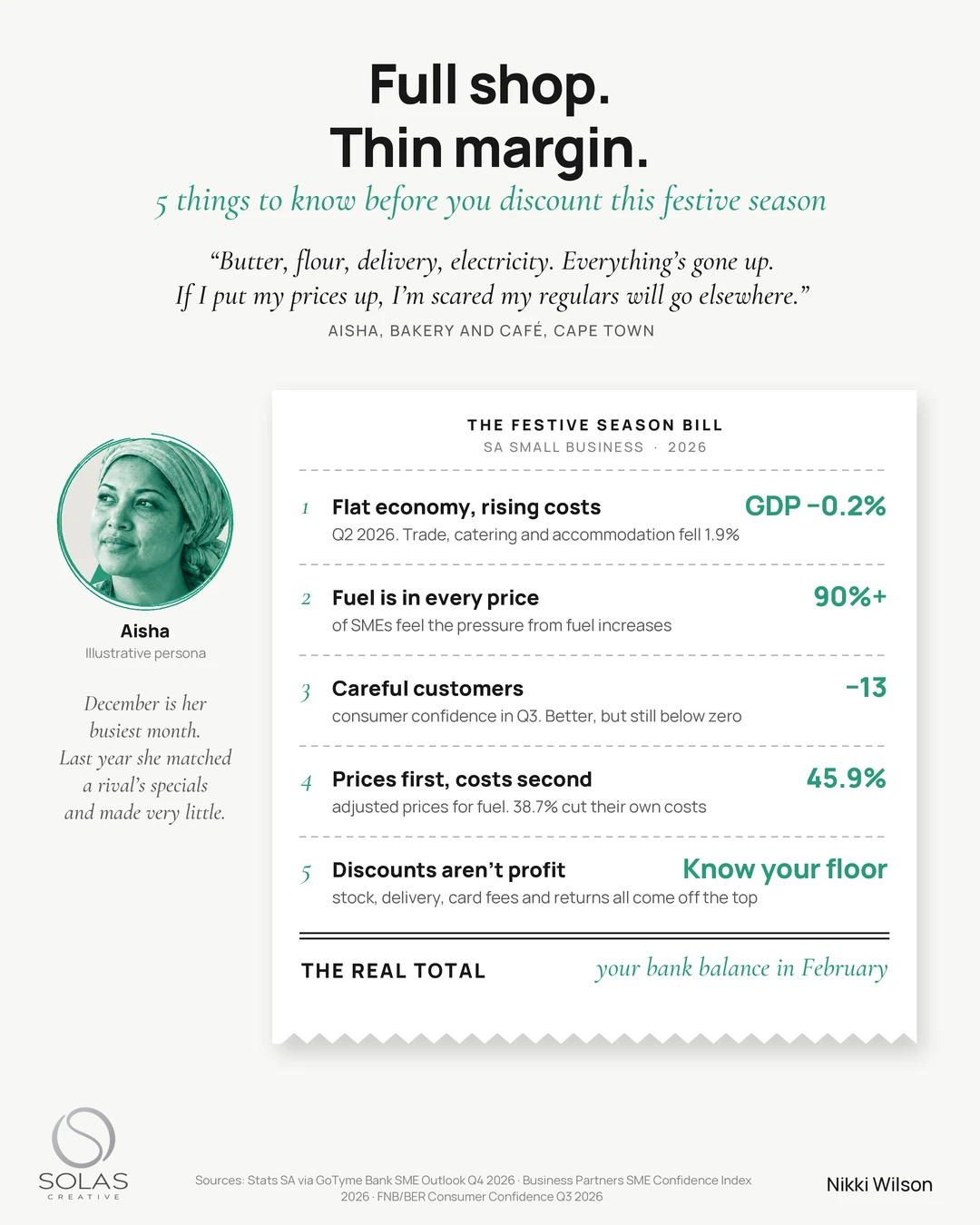
Before you discount this festive season, check your margin. Costs are up (more than 90% of South African SMEs felt fuel price pressure in 2026) and customers are spending carefully, with consumer confidence still below zero. A discount comes straight out of your profit: on a R100 item that costs you R60, 20% off means selling twice as many to stand still. Bundles, pre-orders and rewards for regulars usually protect profit better.
The bakery owner dreading Black Friday
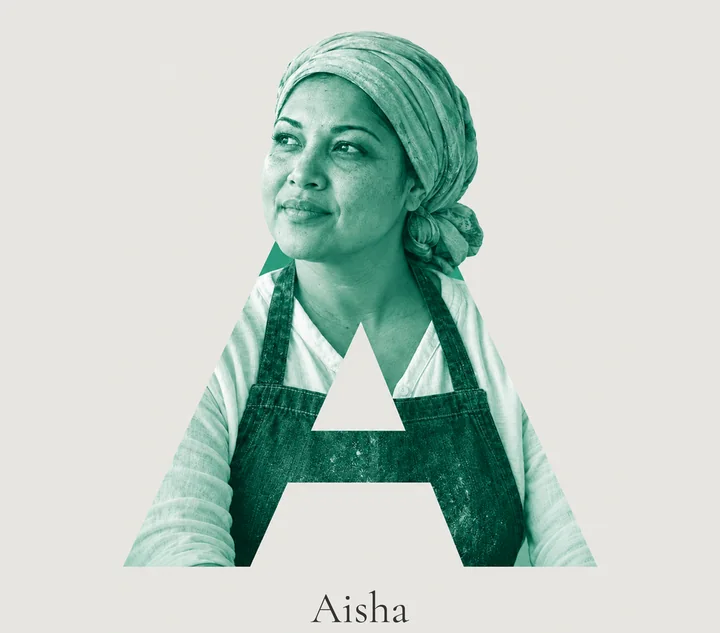
Aisha opened her first café with a family recipe and a small loan. Twelve years later she has two sites in Cape Town, 18 staff and a corporate catering side that brings in about a third of her revenue. December is her busiest month. Last year she matched a competitor’s festive specials and worked flat out for very little profit.
“Butter, flour, delivery, electricity. Everything’s gone up. If I put my prices up, I’m scared my regulars will go elsewhere.”
Aisha is an illustrative persona, built from 2026 research with South African small business owners. Meet all five faces.
This festive season, a lot of South African small businesses are getting it from both sides. Costs are going up, and customers are counting every rand.
It’s tempting to cut prices and hope volume makes up for it. I’d think twice. Aisha still doesn’t know which of her products make money once every cost is counted, and she’s not alone.
Here’s what the research says, and where I’d start.
Five things to know before you discount, and where to start
-
The economy shrank, costs didn’t
−0.2% was South Africa’s GDP change in the second quarter of 2026. Trade, catering and accommodation, where a lot of small businesses sit, dropped 1.9%.
Where to startReview your own costs before you pass increases on: supplier terms, delivery routes, wastage and stock you over-order.
-
Fuel finds its way into almost every price you pay
90%+ of SMEs felt the pressure from fuel increases. Inflation reached 4% in April 2026, after the fuel index jumped 18.2% in a single month.
Where to startWork out which products and services actually make money once every cost is counted, delivery included. Some of your busiest lines may be your least profitable.
Source: Business Partners SME Confidence Index via Zawya · Stats SA CPI via Vutivi Business
-
People are still spending, just more carefully
−13 is the consumer confidence score for the third quarter. It improved, but it is still below zero, and FNB expects shoppers to put essentials first through December.
Where to startLead your marketing with value and reliability, not only price: why your product is worth it, and why customers can count on you.
Source: FNB/BER Consumer Confidence Index via Polity · Related: Content creation
-
Most owners changed their prices before their costs
45.9% of SMEs adjusted their prices because of fuel. Fewer, 38.7%, cut their own operating costs.
Where to startIf you need to put prices up, explain why, give your regulars notice, and look after your best customers first.
-
A discount can fill the shop and empty the margin
2× the sales needed: on a R100 item that costs you R60, a 20% discount halves your profit from R40 to R20, so you need to sell twice as many just to stand still.
Where to startSet a minimum margin for every promotion, meaning the least profit per sale you’ll accept, and prefer bundles, pre-orders or rewards for regulars over blanket discounts.
Source: Solas Creative worked example · Related: Marketing budget calculator
The real test of December is your bank balance in February.
Where marketing comes in. A discount is the easiest message to send, and the most expensive one to keep sending.
- Sell the reason, not the price. Tell customers why your product is worth it: the recipe, the quality, the fact that you deliver on time.
- Look after the customers who matter most. Regulars and corporate clients deserve first notice of specials and price changes, not last.
- Plan December early. Pre-orders and bundles spread the work and lock in sales before the rush.
Knowing which customers to look after starts with knowing who they are. That’s why we build customer personas for South African businesses, the same kind of work behind Aisha.
If you’d like a festive plan that protects your margin, let’s talk.
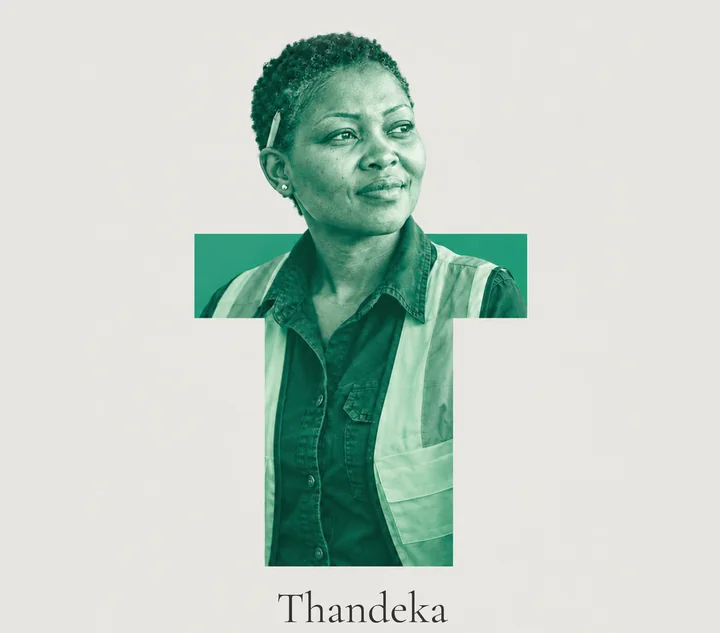 ThandiFramework #2
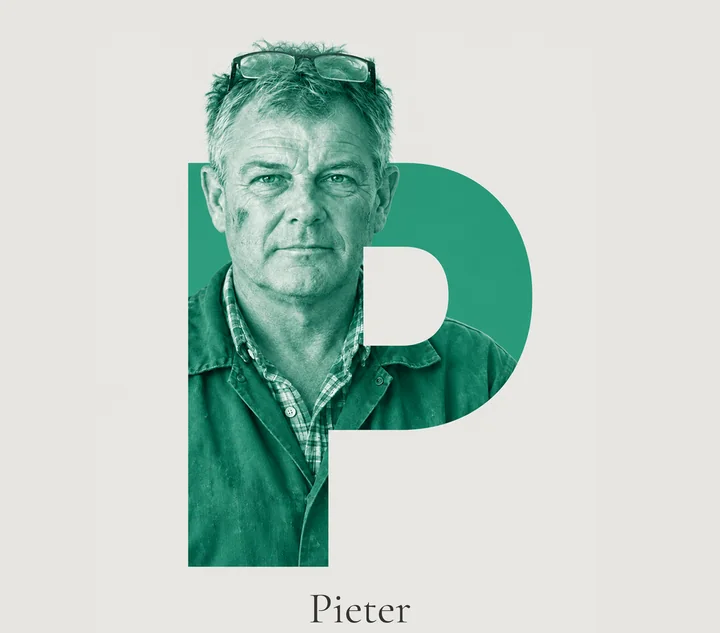 PieterFramework #3
- AishaFramework #4
 SamuelFramework #5 · 27 Oct
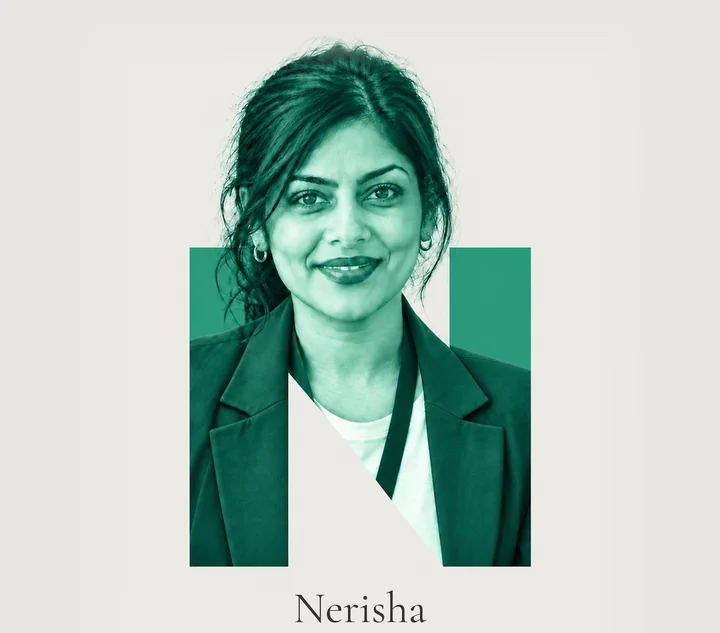 NerishaFramework #6 · 3 Nov
Sources
- Festive demands come up against a new cost squeeze (IT-Online, 2 October 2026, on GoTyme Bank’s SME Outlook for Q4 2026, with GDP and sector figures from Stats SA)
- Surging fuel costs force South Africa SMEs into survival mode as confidence cracks (Zawya, July 2026, on the Business Partners SME Confidence Index)
- SMEs brace for pressure as inflation jumps to 4% (Vutivi Business, on Stats SA’s April 2026 consumer price index)
- South Africa’s consumer confidence rises despite economic uncertainty, survey shows (Polity, 17 September 2026, on the FNB/BER Consumer Confidence Index for Q3 2026)