Busy on paper, broke in the bank.
5 reasons growing SA small businesses still run out of cash. A Marketing Director’s view.
The short answer
Growing small businesses run out of cash because growth costs money before it brings any in, clients pay late, and a healthy bank balance hides what’s due next month. In 2026, 62% of South African small businesses had cash-flow problems even though 80% grew their revenue. The fixes start small: a cash forecast, deposits, a weekly cash check and payment links.
The contractor who’s always owed money
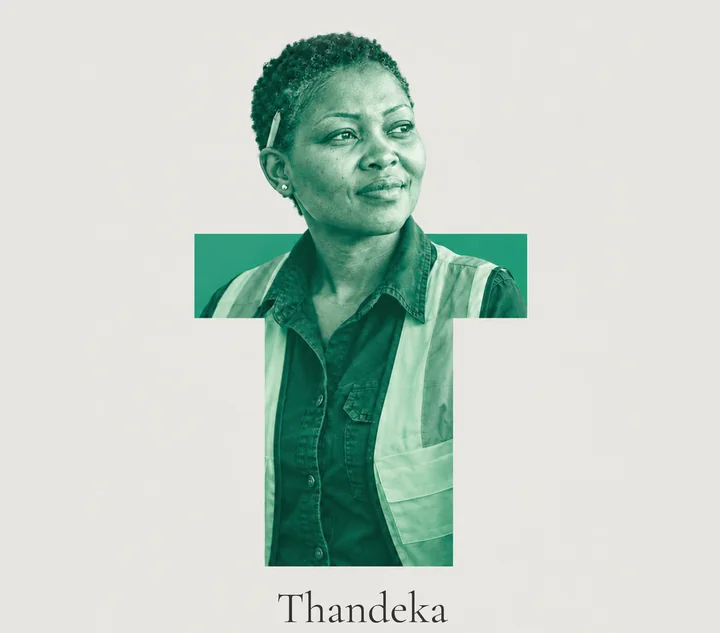
Thandi started out as an electrician and built a solar and electrical business in Midrand with 34 people on the payroll. Her order book has never been fuller. But the panels are paid for upfront, and her biggest client, a municipality, pays in 90 days or more.
“We’ve never been busier. So why am I lying awake working out how to pay salaries on the 25th?”
Thandi is an illustrative persona, built from 2026 research with South African small business owners. Meet all five faces.
Thandi’s problem is more common than most owners admit. Xero’s 2026 survey of 427 South African small businesses found that 80% grew their revenue last year and 75% grew their profit. Yet 62% still ran into cash-flow trouble.
In more than 15 years in marketing and operations, the hardest months I’ve seen were rarely the quiet ones. They were the busy months when the money hadn’t arrived yet.
Here are the five things behind it, and what I’d do first.
Five reasons growing businesses run short, and where to start
-
Growth costs money before it brings any in
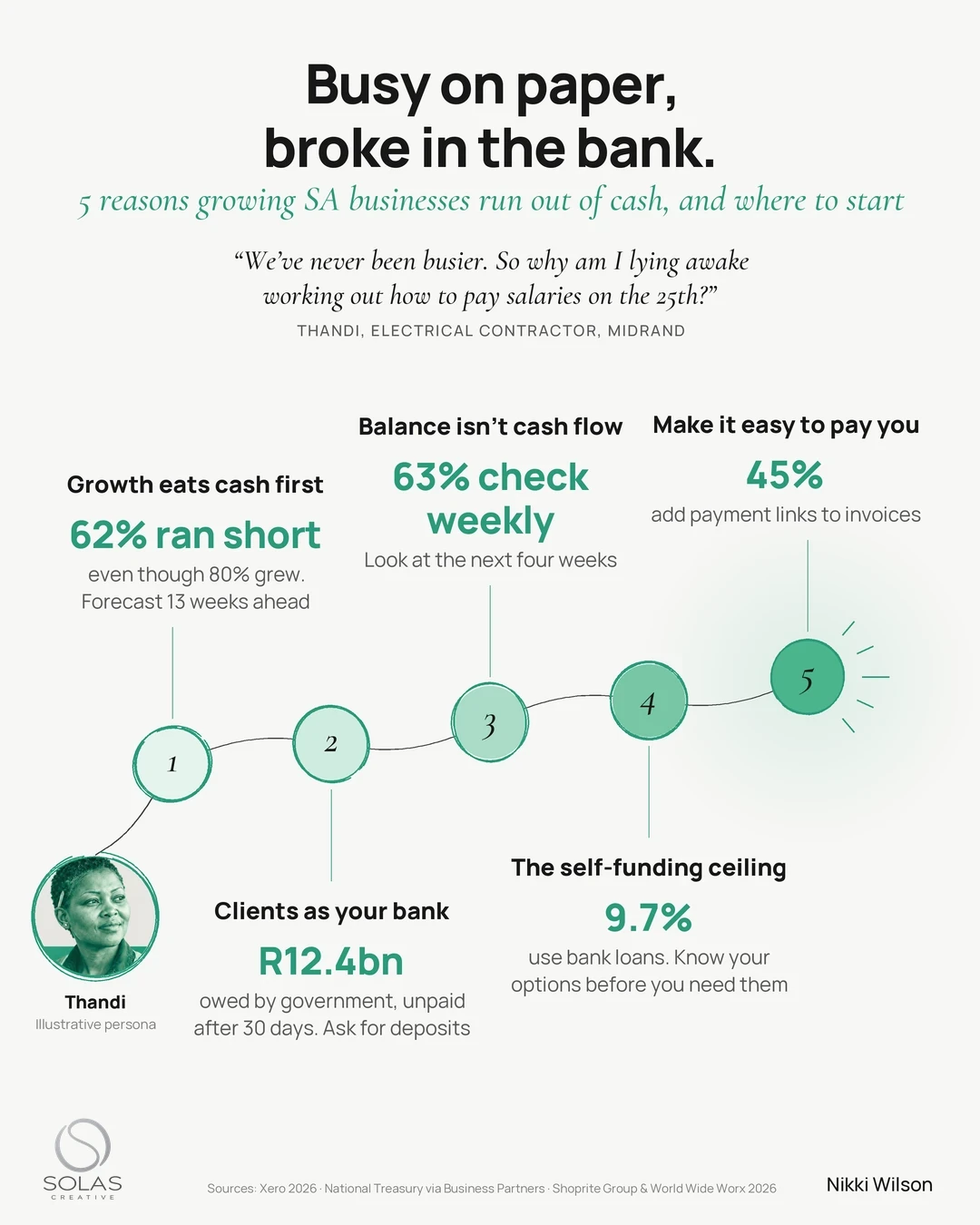
62% of South African small businesses had cash-flow problems in the past year, even though 80% grew their revenue and 75% grew their profit.
Where to startForecast your cash 13 weeks ahead, and before the festive season, all the way to the end of January. A cash forecast is a simple week-by-week list of the money you expect in and the money that must go out.
Source: Xero, 2026 · Related: Marketing strategy for SMEs
-
Some of your clients are borrowing from you
R12.4bn in government invoices was still unpaid after more than 30 days at one point last year: 95,399 invoices. In the private sector, 90 to 150 days isn’t unusual.
Where to startAsk for deposits, shorten your payment terms and send the invoice the same day the work is done. Every day an invoice sits in a drawer is a day added to the wait.
Source: National Treasury data via Business Partners, 2026 · Bridgement via Business Report
-
Your bank balance only tells you about today
63% of owners check their bank balance daily or weekly. It won’t show the VAT, salaries and overdue invoices lined up for next month.
Where to startSet a 15-minute weekly cash check: what’s overdue from clients, and what you must pay in the next four weeks.
Source: Xero, 2026
-
Funding it yourself only goes so far
9.7% of SMMEs use bank loans. More than 90% fund the business from their own resources, and 57.4% have never applied for funding at all.
Where to startFind out what working-capital and invoice finance is available before you need it. Invoice finance means borrowing against invoices your clients haven’t paid yet. Your accountant is the right person to talk this through with.
Source: State of the SMME in South Africa 2026, via Pretoria News
-
Make it easy to pay you
45% of small businesses now send online invoices with payment links to speed up collections.
Where to startAdd a payment link or an instant EFT option to every invoice. The fewer steps a client has to take, the sooner the money tends to arrive.
Source: Xero, 2026 · Related: Website optimisation
A full order book is good news. It only becomes good business once the cash lands.
Where marketing comes in. Cash flow isn’t only a finance problem. The clients you attract decide how quickly you get paid.
- Attract clients who pay. A client who pays a deposit and settles in 30 days is worth more than three who pay in 120. Your marketing should go looking for more of them.
- Plan around your cash. Spread marketing across the year so enquiries don’t only arrive when you can’t afford to take on the work.
- Measure in rands. Track what each enquiry costs and which clients turn into steady, on-time payers.
Knowing which clients are worth having starts with knowing who they are. That’s why we build customer personas for South African businesses, the same kind of work behind Thandi.
I’m a marketing director, not a financial adviser, so talk to your accountant about loans and finance. If you’d like help finding the clients worth having, let’s talk.
- ThandiFramework #2
 PieterFramework #3
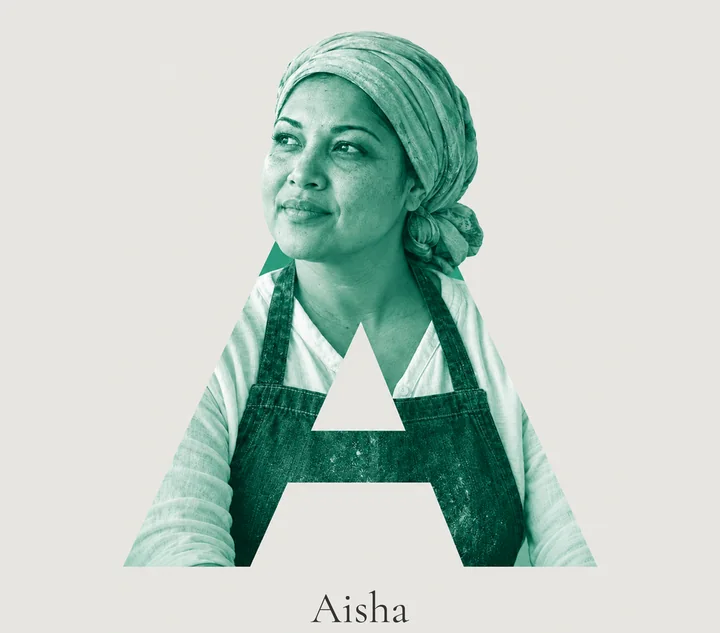 AishaFramework #4
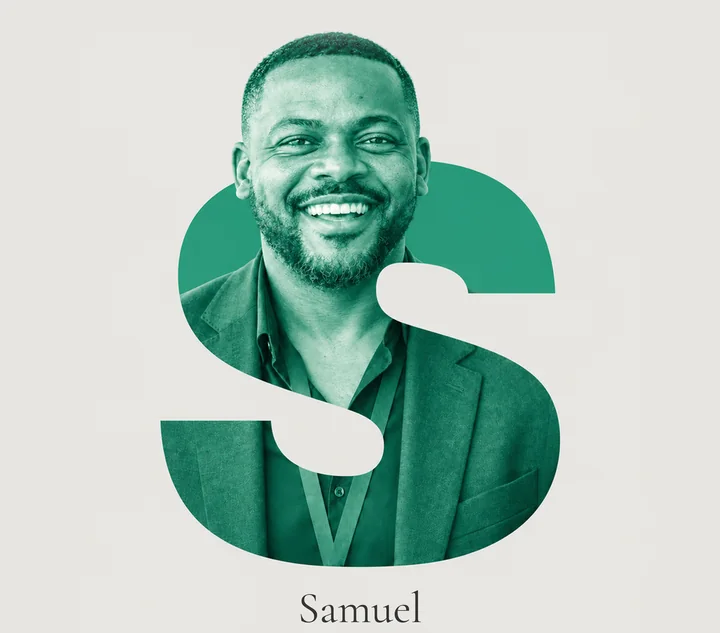 SamuelFramework #5 · 27 Oct
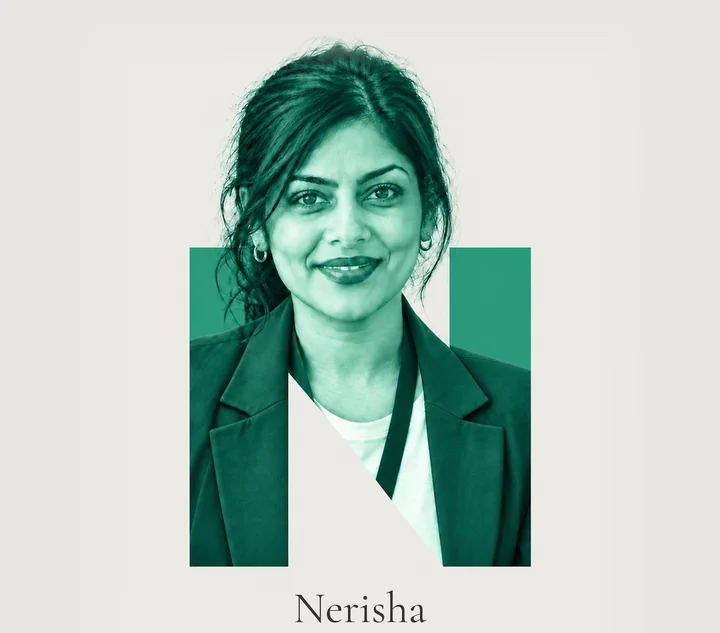 NerishaFramework #6 · 3 Nov
Sources
- South Africa’s small businesses starting to lay foundations against global volatility and rising costs (Xero, 16 April 2026, on the 2026 State of South African Small Business report, 427 small businesses surveyed in January and February 2026)
- SA small businesses prioritise stability and digital growth in 2026, Xero report finds (IOL Business Report, 19 April 2026)
- Urgent action needed: late payments threaten South African small businesses (IOL Business Report, 11 March 2026, on National Treasury payment data reported by Business Partners)
- South African SMEs face cash flow crisis as unpaid invoices soar (IOL Business Report, 17 April 2026)
- South Africa’s SMMEs survive, but struggle to scale (Pretoria News, 17 September 2026, on the Shoprite Group’s State of the SMME in South Africa 2026 report, research by World Wide Worx with 800 small businesses)
- Festive demands come up against a new cost squeeze (IT-Online, 2 October 2026, on GoTyme Bank’s SME Outlook for Q4 2026)